



Your warehouse has Stripe, Salesforce, and Segment. It's missing the platform where your ICP lives.
If you sell into crypto, dev tools, regional B2B, indie SaaS, or the creator economy, the highest-density signal about who your buyers are and what they care about right now is not in your CRM. It's in Telegram: in the mutual groups, the founder back-channels, the niche communities your prospects spend more time in than LinkedIn. The Mastros Telegram extension exports group members and chat messages from Telegram Web to CSV, JSON or JSONL.
Most GTM stacks ingest CRM, product, billing, and ads. They ignore the messaging platforms. That's the gap.
Why Telegram is a leading indicator your warehouse should care about
Telegram communities behave differently than LinkedIn or Twitter. The signal is denser for three reasons:
- Self-selection is the signal. People don't end up in a 400-member crypto market-making group by accident. Both of you actively chose to be there. Group membership is a strong topical and intent label, weighted by the number of mutual groups.
- Time-sensitivity is built in. Activity in a community last week is a much better predictor of buying behavior next quarter than a six-month-old job change pulled from LinkedIn enrichment.
- It's where the back-channel happens. Crypto allocations, dev-tool reviews, regional B2B referrals, creator collabs: these are negotiated in DMs and small groups long before they show up in a public funnel.
If your ICP is on Telegram and you're not extracting that data, you're letting your single best lead-scoring feature evaporate every week.
What a Telegram → warehouse → CRM pipeline looks like
The architecture is the same one you already run for the rest of your stack. Just a new source.
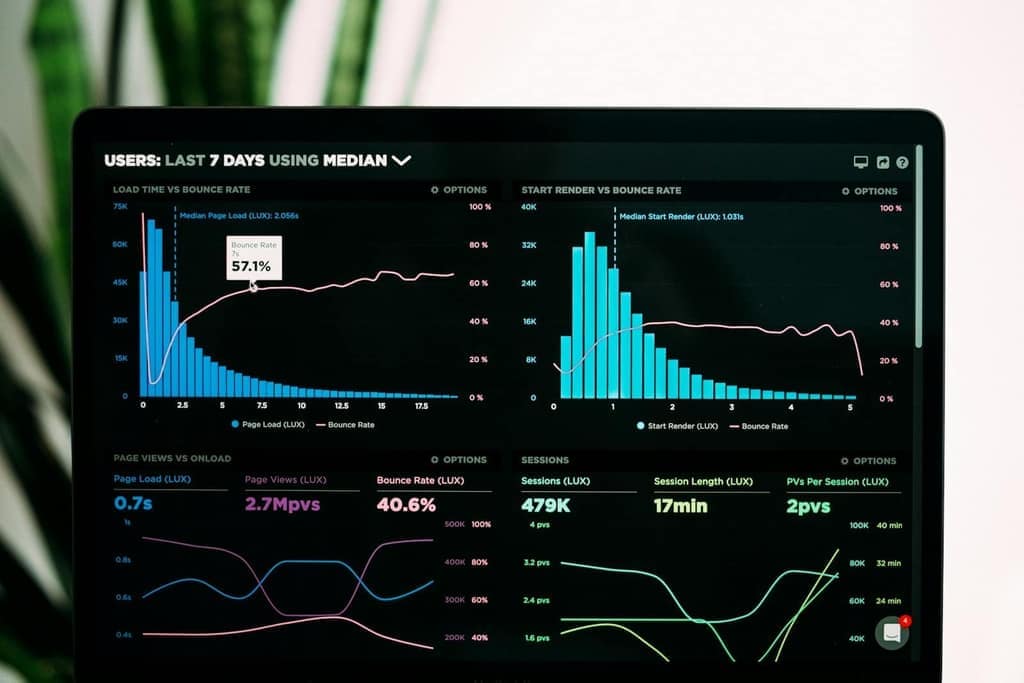
1. Extract. Pull members and message activity from the mutual groups you're already in. Output is structured CSV/JSON/JSONL: username, group ID, last-active timestamp, message count, and any metadata you have permission to see. Local-only extraction (browser-side) avoids the bot-API limitations and keeps the data path inside your own machine.
2. Load. Drop the CSV into your existing dlt, Fivetran, or Airbyte pattern. Schema is small enough to fit comfortably in Snowflake, BigQuery, or Postgres. Three core tables get you 90% of the value:
telegram_groups: group ID, name, member count, topical labels.telegram_members: username, normalized handle, first-seen, last-seen, source group.telegram_overlap: derived view: pairs of (member, member) with shared-group counts and topical weights.
3. Model. dbt this into the same identity-resolution layer as the rest of your CRM. Match Telegram handles to existing CRM contacts via email-equals-handle heuristics, manual mappings, and your existing identity graph. Anything unmatched becomes a candidate-leads table for outbound.
4. Activate. Reverse-ETL the enriched contacts back into Salesforce/HubSpot. New columns: mutual_groups_count, topical_overlap_score, last_telegram_active_at, top_3_shared_groups. Now every account has a Telegram presence score the same way it has a Bombora intent score.
The lead-scoring math that works
Once Telegram data is in the warehouse, the scoring is straightforward and beats LinkedIn-scraped lists in our experience by a wide margin.
A simple model that worked for us:
warm_score(contact) =
    0.5 * shared_group_count
  + 0.3 * topical_relevance(shared_groups, ICP_topics)
  + 0.2 * recency_weight(last_active_at)
- Shared group count: raw count of mutual Telegram groups between you and the contact. Strong baseline.
- Topical relevance: weight each shared group by how close it is to your ICP topics. A founder Telegram with your CTO is worth more than a generic crypto chat.
- Recency: a contact active in a shared group last week is a 4–5x stronger signal than one who hasn't posted in six months.
Anecdotally (sample size of one, take it with salt), outbound built on this scoring hit roughly 4x reply rates compared to the same SDR working LinkedIn-scraped lists. The unlock is the opener, not the volume: "Saw your reply in [specific shared group] last Thursday about [specific thread]" is a different conversation than "I noticed you work at [company]."
What changes inside your CRM
Three concrete reports become possible the day this data lands:
- Topical cohort analysis. Which segments of your ICP are clustering in which Telegram communities right now? That tells you where to advertise, where to sponsor, and where to send your founder to drop in.
- Group-overlap scoring on every account. Every open opportunity gets a Telegram-presence score. Reps prioritize accordingly.
- Time-since-touch on warm contacts. "Show me everyone in 3+ mutual groups I haven't messaged in 90 days who posted in a shared group this week." That query is impossible from inside the Telegram app and trivial against your warehouse.
A side benefit: it's a backup
Telegram's spam classifier is aggressive at scale, account bans happen, and there's no clean export path from inside the app. Owning the CSV means owning the network independent of the platform. Treat it the same way you treat a CRM backup: versioned, in cold storage, restorable.
The extraction layer
The piece most teams under-invest in is the first mile: getting the data out cleanly in the first place. The bot API is rate-limited, scraping services are unreliable, and DIY scripts break every Telegram update.
We built Mastro's Telegram Data Scraper to be the extraction layer: a Chrome extension that processes data locally in your browser and exports clean CSV/JSON/JSONL ready to load. No server-side scraping, no third-party data sharing, no rate-limit gymnastics. The output is the input to the rest of your existing pipeline.
If the rest of your warehouse is built on dlt, Fivetran, dbt, and a reverse-ETL tool, the Telegram source slots in alongside the others. The hard part isn't the pipeline. It's deciding to treat Telegram as a first-class GTM data source. Most of your competitors haven't yet.
Photos via Unsplash.